Learn to Paint with Olga Shmatova
Watercolor: A Self-Study Guide
A step-by-step guide to 20 watercolor techniques — classical methods alongside the author's own — illustrated with works by Olga Shmatova and her students. The most successful book in the series.

Published in Russian by EKSMO · In print continuously since 2005 · Chinese publication rights acquired in 2019 · Not yet available in English.
Part of the "Learn to Paint with Olga Shmatova" series. The book has been published by EKSMO since 2005 and remains in print to this day.
About the Book
After the successful release of the gouache self-study guide in 2004, the "Learn to Paint with Olga Shmatova" series was created, and the watercolor self-study guide was published as part of it. The book brought together both classical watercolor techniques and the author's own methods, and was enriched with students' works that vividly demonstrate how effective the teaching method is.
The watercolor self-study guide became the most successful book in the series. Despite the abundance of watercolor books on the market — both when the guide first appeared and today — it remains exceptionally popular with readers. The current version of the guide meets its audience's needs so precisely that EKSMO is cautious about the idea of reissuing it: a new version, even an improved one, might not repeat the unique success of the existing book, which over the years has proven exceptionally effective in teaching watercolor technique.
The book has won wide recognition both in Russia — where it is recommended for study in art schools and supplementary art education programs — and abroad. In 2019, the publication rights were acquired by a Chinese publisher, confirming the universal appeal of the author's approach to teaching and the demand for it.
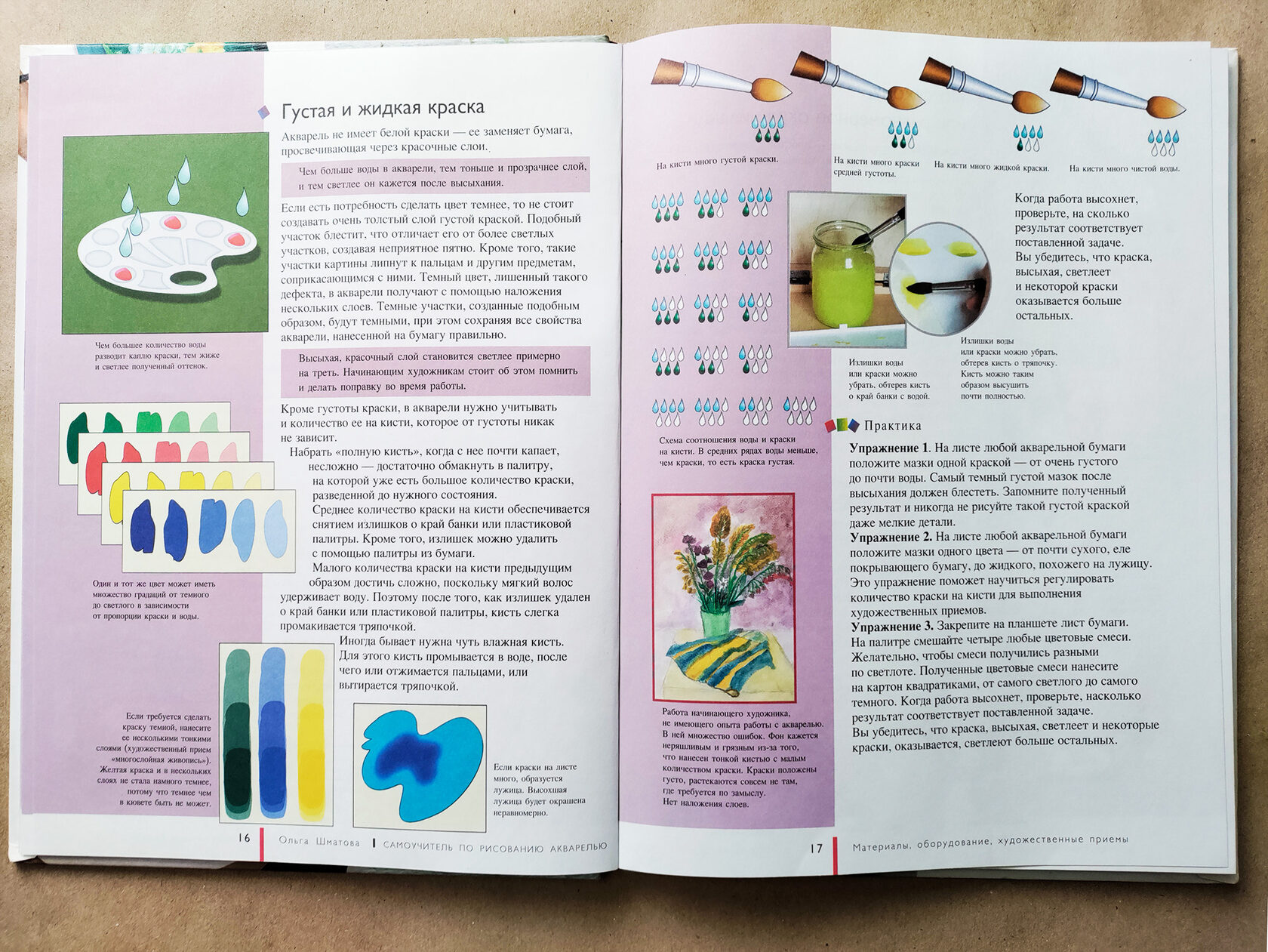
A distinctive feature of this guide is its emphasis on the state of the painting surface — the degree of dampness of the paper. Special attention is paid to the amount of paint and water on the brush and on the palette, which is critically important for successful work in watercolor.
Important: The year printed in the book may differ from the year of first publication, because the publisher updates it with every reprint. You can check which printing you are holding in the publication data on the last page of the book. The ISBN may also change between reprints.
About This Edition
- ISBN 978-5-699-18797-3
- Publisher: EKSMO
- 80 pages with illustrations
- Format: 84×108 1/16 (Russian standard sheet-format notation)
- First published in 2005
Who This Book Is For
- Beginning artists who want to master watercolor technique
- Anyone who wants to use all 20 watercolor painting techniques
- Artists who want to raise their technical level
- Anyone who wants to learn the methods of an experienced professional
The Advantages of Watercolor
Versatility and mobility
- Compact materials
- Easy to transport
- You can work in any conditions
- Quick to set up
Practicality in use
- Dries quickly
- Odorless
- Mixes easily
- Ideal for painting at home
- Tools are easy to clean
Affordability and economy
- A wide choice of paints from different manufacturers
- A range of price categories
- Paints keep for a long time
- A minimal set of tools
- Economical use of materials
Technical advantages
- Transparency and richness of color
- The possibility of multi-layered painting
- A wealth of color transitions
- Purity and brightness of color
- The ability to lift paint and let it flow
Creative possibilities
- A multitude of artistic techniques
- Combines well with other media
- Room for experimentation
- Unpredictable effects
- Every work is unique
Demand
- Popular in illustration
- Used in sketching
- Used in design
- Watercolor works are sought after
- Relevant in contemporary art
Educational value
- Develops a sense of color
- Trains precision of movement
- Teaches you to plan your work
- Develops observation skills
- Builds an understanding of working with tone
Longevity of finished works
- Lightfastness of modern pigments
- Easy framing
- Availability of archival materials
- Easy storage
- Restoration is possible
Environmental friendliness
- Natural components
- Safe to use
- No toxic substances
- Biodegradable
- Minimal impact on the environment
Social aspects
- A large community of watercolorists
- A wealth of learning resources
- Accessible workshops and master classes
- Opportunities to take part in plein-air painting sessions
- An active exhibition scene
What's Inside the Book
Materials and Equipment
- Materials
- Getting started
Artistic Techniques
- Transparent and semi-transparent paints
- Thick and diluted paint
- Working on dry paper, or flat application
- Using pencils
- Wash
- Fine lines
- Wet-on-wet, or working on damp paper
- Multi-layered painting, or dry-on-dry
- Softening edges on dry paper, or blending with water
- Softening edges on wet paper
- Brushstrokes
- Dry brush
- Hatching
- Masking fluid, tape, and stencils
- Scratching out and using an eraser
- Lifting down to the paper
- Palette knife
- Salt
- Spattering
- Paper texture
Painting Together
- Painting roses using different artistic techniques
- The value of repeated practice
- Using photographs as a supporting reference
Special Features of the Book
- Clear explanations with example works
- Detailed step-by-step illustrations
- Technique diagrams with practical tips
- Descriptions of common mistakes and how to correct them
- A set of exercises for every technique
- Advice from an experienced artist
What You Will Learn
- Skills and techniques for working in watercolor
- Creating smooth transitions of color and tone
- Drawing fine lines
- Applying semi-transparent layers
- Original watercolor techniques
- Choosing materials and tools
Illustrations in the Book
The self-study guide features works by both the author and her students. Olga Shmatova did not always sign the illustrations, trusting that readers would intuitively be able to tell professional works from student works.
The Author Thanks Her Students
The book features works by the author and her students: Tatyana Golubeva, Tatyana Veselova, Yaroslava Kuzmicheva, Vera Shmatova, Evgenia Neroznikova, and Aleksei Petrov.
Inside the book